 Wahiba Sands Oman Tours
Home › Guides › Wahiba Sands Weather: When Is the Best Time to Visit?
Wahiba Sands Weather: When Is the Best Time to Visit?
Wahiba Sands weather is best from November to March, when average highs stay between 25.4°C and 31.8°C. This page gives a month-by-month table, the night lows and sunset times, and which kind of tour fits each season.
Quick answer Best months and nights
The Ministry of Heritage and Tourism gives September to April as the best time for the Sharqiyah Sands, and average highs stay between 25.4°C and 31.8°C from November to March. A day trip such as Wahiba and Wadi Bani Khalid Group Day costs $95, and Private Sunset 4x4 with Dinner at $100 fits the cool late afternoon.
Key takeaways
- Winter is the comfortable season, with January lows of 13.1°C (56°F), so a night needs a warm layer.
- Wahiba Hot Air Balloon runs in winter at $300 for a 2-hour tour, according to the Ministry's note on Bidiyah balloon flights.
- A day trip like Wahiba and Wadi Bani Khalid Group Day is 8 hours, and only about 3 of them are in the desert and oasis.
- Compare every trip on the Wahiba Sands tours page once you know your month.
When Is the Best Time to Visit Wahiba Sands?
September to April is the Ministry's window, and November to March is the comfortable core with highs from 25.4°C to 31.8°C.
The Ministry of Heritage and Tourism names September to April for the Sharqiyah Sands. The climate data narrows that to the coolest months.
Why November to March
The ERA5 record for the camp area near Bidiyah gives average highs of 30.5°C (87°F) in November, 26.9°C (80°F) in December, 25.4°C (78°F) in January, 28.1°C (83°F) in February and 31.8°C (89°F) in March. The Ministry describes Oman's winter as November to early March, with mild and dry weather.
April and October are the shoulder months. Average highs reach 36.5°C (98°F) in April and 35.4°C (96°F) in October, so midday on the dunes is hot. September is inside the Ministry's window, yet its average high is 38.3°C (101°F) and its rain is 0 mm, so go early or late in the day.
Sources: Experience Oman, Experience Oman, Copernicus Climate Data Store.
What Is the Weather in Wahiba Sands Month by Month?
Highs run from 25.4°C in January to 41.8°C in June, and lows from 13.1°C to 26.8°C.
One table covers all twelve months for the camp area near Bidiyah.
Month grid
The table gives the average daily high and low and the monthly rain from the ERA5 climate record for 1995 to 2024, and the sunset time on the 15th of each month from the NOAA solar calculation for the camp area. Sunset marks the end of the dune drive and the start of the cold.
| Month | Average high | Average low | Rain | Sunset |
|---|---|---|---|---|
| January | 25.4°C (78°F) | 13.1°C (56°F) | 3 mm, 0.7 days | 17:42 |
| February | 28.1°C (83°F) | 14.7°C (59°F) | 5 mm, 1.0 days | 18:02 |
| March | 31.8°C (89°F) | 17.9°C (64°F) | 18 mm, 2.0 days | 18:14 |
| April | 36.5°C (98°F) | 22.0°C (72°F) | 13 mm, 1.6 days | 18:25 |
| May | 40.4°C (105°F) | 25.3°C (78°F) | 3 mm, 0.7 days | 18:38 |
| June | 41.8°C (107°F) | 26.7°C (80°F) | 9 mm, 0.6 days | 18:50 |
| July | 40.7°C (105°F) | 26.8°C (80°F) | 8 mm, 1.0 days | 18:52 |
| August | 39.7°C (103°F) | 25.5°C (78°F) | 4 mm, 0.7 days | 18:37 |
| September | 38.3°C (101°F) | 23.9°C (75°F) | 0 mm, 0.1 days | 18:08 |
| October | 35.4°C (96°F) | 21.3°C (70°F) | 2 mm, 0.3 days | 17:40 |
| November | 30.5°C (87°F) | 17.5°C (64°F) | 3 mm, 0.6 days | 17:21 |
| December | 26.9°C (80°F) | 14.2°C (58°F) | 4 mm, 0.9 days | 17:23 |
Sources: Copernicus Climate Data Store, NOAA Global Monitoring Lab.
How Hot Does Wahiba Sands Get in Summer?
June averages a high of 41.8°C (107°F) and a low of 26.7°C (80°F), and May to August all average above 39°C by day.
The Ministry says lowland temperatures in Oman's summer generally run between 35 and 45 degrees Celsius.
What heat does to a trip
May is 40.4°C (105°F), July 40.7°C (105°F) and August 39.7°C (103°F) on average. The lows stay at 25.3°C to 26.8°C, so the night offers little relief. Rain is low, with 9 mm in June as the wettest summer month.
Tour listings reflect the season. Wahiba and Wadi Bani Khalid Group Day is an 8-hour day and only about 3 hours of it is in the desert and the oasis. Private Sunset 4x4 with Dinner is a 4-hour sunset trip with dinner. In summer, the short sunset slot keeps you out of the midday sun. Sunset in June is at 18:50.
Sources: Experience Oman, Copernicus Climate Data Store, NOAA Global Monitoring Lab.
How Cold Are the Nights in Wahiba Sands?
January is the coldest month, with an average low of 13.1°C (56°F) and a 12.3°C gap between the day and the night.
The desert cools quickly after sunset in winter, and the sun sets at 17:42 in mid-January.
Winter nights
December lows average 14.2°C (58°F) and February lows 14.7°C (59°F). In June the gap between day and night is 15.1°C, but the low is still 26.7°C, so a summer night is warm and a winter one is not.
A night at a camp therefore means a warm layer from November to March. 2-Day Stay at Al Salam Camp is $580 per person for 2 days, and its listing excludes all entrance fees. 2-Day Private Dune Bashing Stay sleeps in a standard room, listed at $545.
Sources: Copernicus Climate Data Store, NOAA Global Monitoring Lab, Experience Oman.
Tours That Fit
A day trip, a sunset trip and a winter balloon flight.
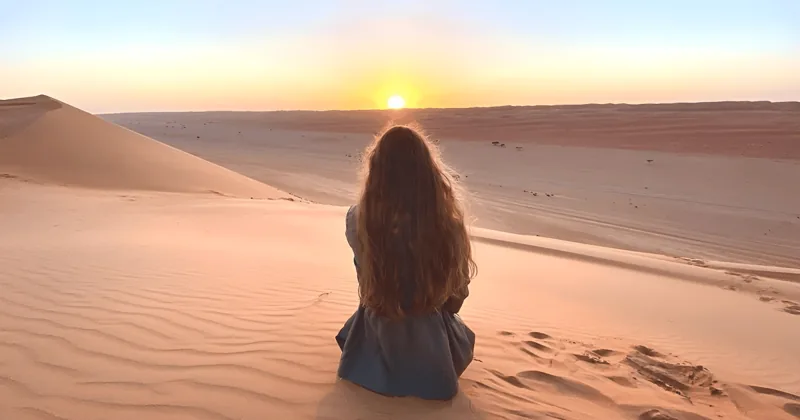 from $95
Most reviewed
Wahiba Desert and Wadi Bani Khalid Guided Group Tour with Lunch
Four formats on one listing: desert then wadi, wadi then sunset, a quad option or a camp night, with lunch included.
Check Availability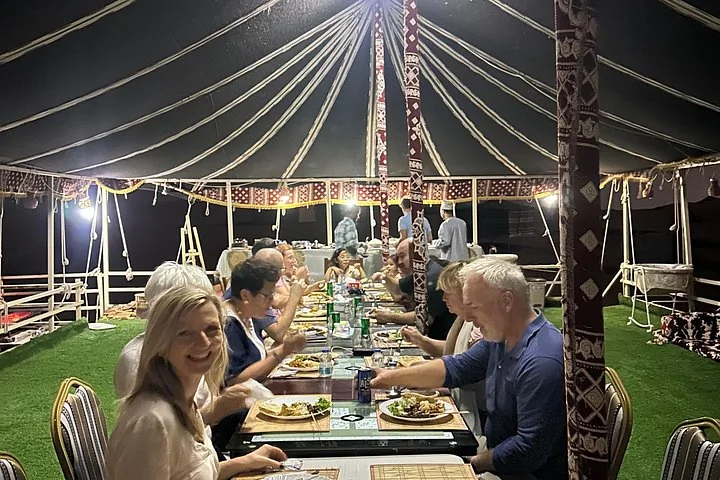 from $100
Camp dinner
Sunset in Wahiba Sands 4x4 Adventure
A short private sunset in the dunes with sandboarding and a camp dinner, priced low, but the start point is unstated.
Check Availability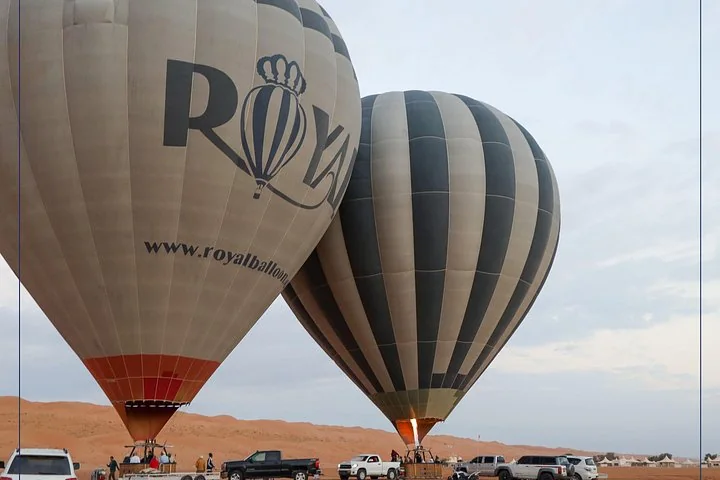 from $300
Sunrise flight
Hot Air Balloon Tour at Wahiba Sands
A 50-minute sunrise balloon flight over the dunes, transfers only from the listed desert camps.
Check AvailabilityWhat to Wear in Wahiba Sands?
Wear light clothes, a sun hat and sunscreen by day, and add a warm layer for winter nights.
The Ministry advises appropriate clothing, sunscreen and plenty of water in the sands.
Packing from the listings
Quad, Horse and Sunset Day lists comfortable shoes, sunglasses, a sun hat, a change of clothes, a camera, sunscreen and outdoor clothing. Dune Buggy from Bidiyah lists sunglasses, sunscreen and comfortable clothes. Wahiba and Wadi Bani Khalid Group Day adds swimwear and a towel for the wadi stop.
The Ministry of Foreign Affairs says dressing conservatively is appreciated in Oman. For a winter night, lows of 13.1°C in January justify a jacket.
Sources: Experience Oman, Oman Ministry of Foreign Affairs.
Which Tour Slot Fits Each Season?
Book a night from November to March and a sunset or morning slot in the hot months.
The table matches the season to a kind of trip, using the average highs and lows above.
Season to slot
The table pairs each season with the average high and low from the climate record and the kind of Wahiba Sands trip that fits, using tour lengths from the listings.
| Season | Average high | Average low | Slot that fits | Example |
|---|---|---|---|---|
| November to March | 25.4°C to 31.8°C | 13.1°C to 17.9°C | A night or a full day | 2-Day Stay at Al Salam Camp |
| April and October | 36.5°C and 35.4°C | 22.0°C and 21.3°C | Sunset slot or early start | Private Sunset 4x4 with Dinner |
| May to September | 38.3°C to 41.8°C | 23.9°C to 26.8°C | Sunset slot, short day | Private Sunset 4x4 with Dinner |
Sources: Copernicus Climate Data Store, Experience Oman.
How Many Nights in Wahiba Sands?
One night is what the 2-day tours sell, and a day trip needs none.
The listings here offer 8 to 10 hour day trips and 2-day trips with 1 night.
Day, one night or more
Shared Day with Muqal Cave runs 10 hours and Shared Day with Al Mintrib Castle runs 9 hours, both from Muscat with no night. 2-Day Stay at Al Salam Camp is 2 days and 1 night. Overnight Camp with Wadi Shab is 2 to 3 days at $441 per person, so ask how many nights the dates you pick include.
One night adds a mid-January sunset at 17:42 and a low of 13.1°C.
Sources: NOAA Global Monitoring Lab, Copernicus Climate Data Store.
Is Wahiba Sands Worth It?
Yes in the cool months, and the Ministry lists dune driving, camel trekking, sandboarding and stargazing.
The sands cover about 10,000 square kilometres.
What the Ministry lists
The Ministry calls the Sharqiyah Sands one of the most beautiful camping sites in the Sultanate and describes North Al Sharqiyah as one of the best places for stargazing. Choose November to March for the comfortable days and the cool night sky.
Sources: Experience Oman, Experience Oman.
Wahiba Sands Weather FAQ
Does it rain in Wahiba Sands?
Rarely. March is the wettest winter month at 18 mm over 2.0 days, and September averages 0 mm. Most days are dry, so rain rarely changes a plan for Private Sunset 4x4 with Dinner.
What is the hottest month in Wahiba Sands?
June, with an average high of 41.8°C (107°F). A sunset slot such as Private Sunset 4x4 with Dinner avoids the midday heat.
What is the coldest month in Wahiba Sands?
January, with an average low of 13.1°C (56°F). Pack a warm layer for 2-Day Stay at Al Salam Camp.
When does the sun set in Wahiba Sands in winter?
At 17:21 in mid-November and 17:42 in mid-January. Plan Private Sunset 4x4 with Dinner around it.
Is a hot air balloon flight possible in winter?
Yes, the Ministry says winter flights run in Bidiyah, depending on weather. See Wahiba Hot Air Balloon.
More Guides
- Christmas in Oman 2026: A Night in the Wahiba Sands Desert
Christmas 2026 in the Wahiba Sands: sunset is 17:27 on 24 December. See the weather, the rules and which desert night to book.
- Is Wahiba Sands Worth Visiting?
Is Wahiba Sands worth visiting? A verdict by traveller type, how many days to stay and what to wear, with 8-hour day trips. Read 2027.
- New Year in Oman 2026-27: New Year's Eve in the Wahiba Sands
New Year's Eve 2026 in the Wahiba Sands: sunset is 17:31 on 31 December. See the rules, the weather and which desert night to book.